Ηφαίστειο
 Η Κως είναι ένα μαγευτικό νησί, στο κέντρο του Δωδεκανησιακού συμπλέγματος. Βρίσκεται βορειοδυτικά της Ρόδου και νοτιοανατολικά σε σχέση με την ηπειρωτική Ελλάδα και είναι το τρίτο...
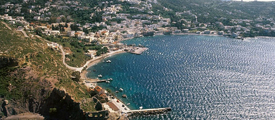 Η Λέρος έχει έκταση περίπου 53 τετραγωνικά χλμ. ενώ έχει πολλά χωριά που αποτελούν ένα Δήμο με έδρα τον Πλάτανο. Τα πιο σημαντικά χωριά της Λέρου είναι: Το Λακκί το μεγαλύτερο λιμάνι...
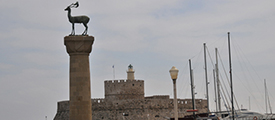 Η Ρόδος είναι το μεγαλύτερο νησί της Δωδεκανήσου. Βρίσκεται στη νοτιοανατολική πλευρά του Αιγαίου, απέναντι από τις μικρασιατικές ακτές, από τις οποίες απέχει 11 μίλια...





Castle of Neratzia
- Κατηγορία: Kos Town
- Δημοσιεύτηκε στις Τετάρτη, 13 Ιουνίου 2012 13:51
- Γράφτηκε από τον/την HostPlus ltd
- Εμφανίσεις: 5269
-

-

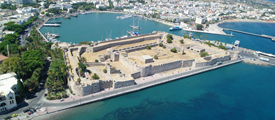
 The castle of Neratzia was built by the Ioannites Knights on a small island on the south side of the harbour of Kos. It communicated with a mobile bridge with the surrounding city called “Hora”. As is already well – known, after the Knights of the Order of St John of Jerusalem,
were chased away from the Holy Grounds they ended up in Rhodes and organized the area into a defensive system whose aim was the unhindered transfer of the pilgrims and the visitors to the Holy Grounds. The dangers of the Ottoman attacks and the attacks of the pirates made the Castle of Neratzia one of the most important bastions of the western civilization. Together with the Castle of Petroumiou on the opposite side of the Asia Minor coast, they controlled the narrow sea passing between Kos and Bodrum(Alikarnassou). The first written testimony of the existence of the castle is made in 1431 when guards were delegated by Nicolo de Martoni. Its architectural form, which is not dated before the 15th century, show there was no architectural evidence of previous forms during the Byzantine period.
The construction and repair of the fortified works at Neratzia during the Hippocrates period of 1337-1522 can be separated into two phases, which were due to the transition from the use of traditional weapons to the use of weapons with powder during the 15th century. So in the first building phase they place a rectangular indoor surrounding wall with aligned walls and circular corner towers. After the middle of the 15th century the fortification is reinforced with the external surrounding wall, with special walls and impressive prebattle areas. After 1522 during the take over of Rhodes by the Ottomans, Neratzia surrendered to the Sultan till 1912. The Castle of Neratzia presents two chronological phases which belong to the Hippocrates period and the period of repairs and substitute works during the Turkish reign. Kos Island - Castle NeratziaDuring the older phase there was an interior surrounding wall which can be dated by the emblems of the Great Magistros to the 3rd quarter of the 15th century. It is divided from the exterior from the south, the west and the northern side by an interior moat.The entrance towards the wall opens into a square tower of the south western side of the castle and is constructed using marble doorposts and marble lintels which bore the emblem of the Great Magistro d’ Aubusson of the Kos Battalion Carndino during 1478. The corridor of the gate is covered by ten (10) stone columns made of granite which come from the old Christian basilica of Limenos.
The smaller towers consist of vertical equal walls which are crowned by paronychia and powerful battlements. In the construction plenty of building materials were used from ancient buildings and marble signs. From the four surrounding columns – three were saved. The exterior wall consisted of a fine specimen of expertise which the Ioannites had obtained while executing fortification works after the siege of Rhodes from the Turks in 1480. It was rectangular with four bastions in the corner. It was well built to with stand the attacks by cannons. It communicated with the interior wall with an arched bridge. At the same time the exterior moat was formed on the southern side. It communicated with the walled Medieval city Hora, with a mobile bridge and it had an initial width of 33 metres. During the Italian reign it was transformed into a flat avenue, todays Finikon Street. The bastion of the exterior wall had domed corridors which led to the side areas which had cannon holes. To be able to deal with the smoke from the cannons, air shafts were constructed. The roof of the prebattle area was transformed into powerful cannon holes. The polygon bastion of D’Aubusson (1476-1503) may have been the first to be constructed. Work began in 1489 with the intent of protecting the northern side of the castle. Kos Island - Castle of NeratziaIn the south west corner was the port of Kos and the bastion of the Great Magistro Fabrizio del Carreto (1513-1521). It was of circular shape with singular openings of the cannon areas. In the eastern side of the exterior wall there is a square bastion of D’Aubusson(1476-1503) with a square perimetrical corridor on the ground floor with nine cannon holes and air shafts for ventilation and a stone scale which leads to the first level and the roof. The works which followed the bastion were built with stones and for the biggest part were carved.