Volcano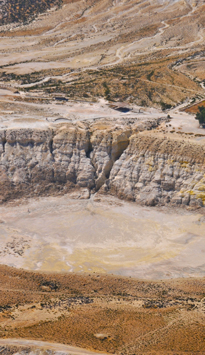
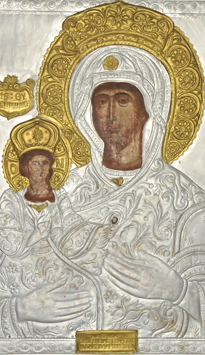
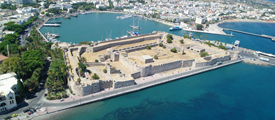 Kos is an island of majestic beauty, lying in the centre of the Dodecanese chain in the Aegean Sea. ("Dodecanese" in Greek means "twelve islands"). Lying north west of Rhodes and south east...
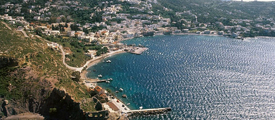 Leros Island is approximately 53 square kilometres. The island consists of one municipality which has its administrative headquarters in Platanos. The most important villages of Leros...
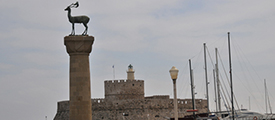 Rhodes is the biggest island of the Dodecanese. It lies at the south-eastern corner of the Aegean, opposite the coast of Asia Minor, about 11 miles away. It has an area of 1398 square...






Polybotes and Kos
- Category: Mythology
- Published on Tuesday, 12 June 2012 18:02
- Written by HostPlus ltd
- Hits: 4565
-

-

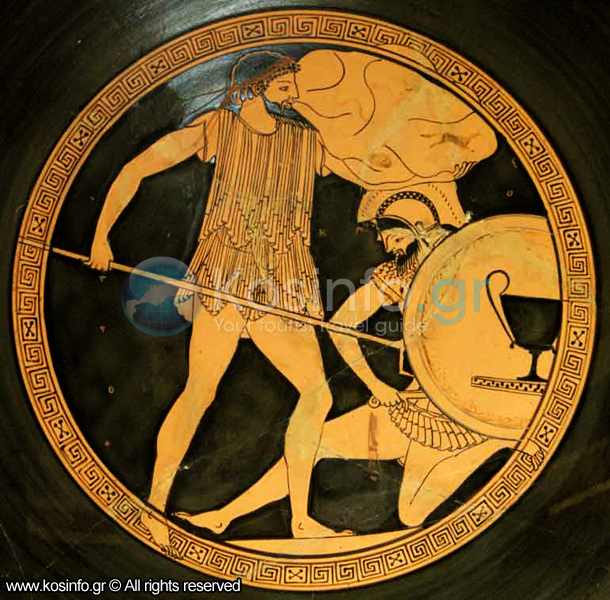 Long before the twelve gods of Olympus came to power, people worshipped and were ruled by the sons of Gaia (Earth) and Ouranos (Heaven). These were the giants, or the Titans. In a battle that shook the very foundation of the universe, these giants struggled against the Olympian gods, led by Zeus the son of the Titan Chronos (Time).
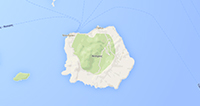
The Titans were eventually defeated and after the battle, the giant known as Polybotes fled to Kos to seek refuge. The god of the sea, Poseidon, had a particular hatred for Polybotes and pursued him there. When Poseidon found Polybotes he broke off a part of Kos Island and hurled it at him, crushing the giant and killing him. This, according to myth is how the isle of Nisyros was formed. (Nisyros was in fact part of Kos but was separated by an earthquake. The exact time when this occurred is unknown.)