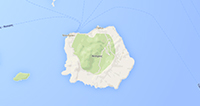
Volcano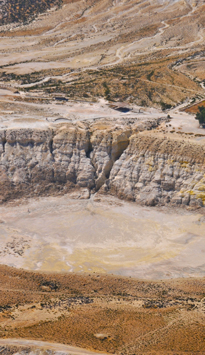
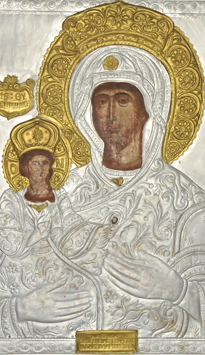
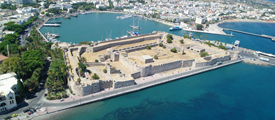 Kos is an island of majestic beauty, lying in the centre of the Dodecanese chain in the Aegean Sea. ("Dodecanese" in Greek means "twelve islands"). Lying north west of Rhodes and south east...
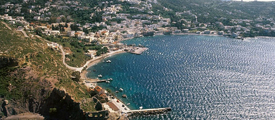 Leros Island is approximately 53 square kilometres. The island consists of one municipality which has its administrative headquarters in Platanos. The most important villages of Leros...
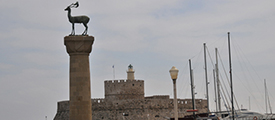 Rhodes is the biggest island of the Dodecanese. It lies at the south-eastern corner of the Aegean, opposite the coast of Asia Minor, about 11 miles away. It has an area of 1398 square...





Hercules in Kos
- Category: Mythology
- Published on Tuesday, 12 June 2012 18:10
- Written by HostPlus ltd
- Hits: 5347
-

-

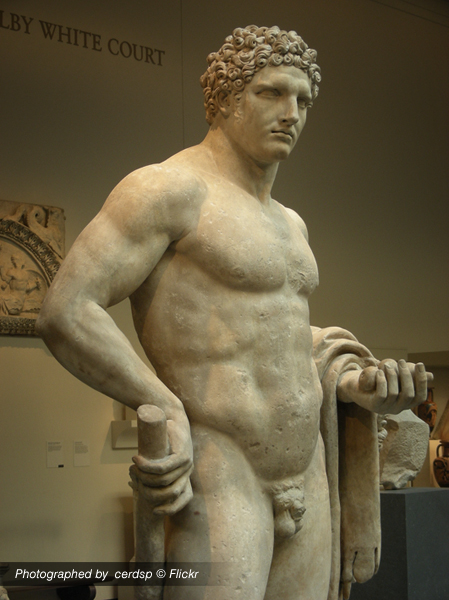 Returning with his friends from Troy, with six ships heavily laden with treasure, Hercules got caught in a terrible storm of unparalleled proportions. The storm had been summoned by Hera, whose hatred for Hercules had once again been rekindled, and she was determined to wipe his name from the face of the earth.
Five of the six ships did go down and everyone on board was lost, but Hercules and some of his friends managed to land at what today is known as Cape Gourniatis in Kos. Here he met a young shepherd called Antagoras, watching his flock. Hercules demanded food from the shepherd, but Antagoras who was physically strong himself, refused to be intimidated and would not give Hercules and his comrades any food. This caused Hercules to attack him in a fit of rage. They wrestled for a long time with no man gaining the upper hand until Antagoras' fellow citizens came to his aid. Hercules' companions then came to his aid and a fierce battle ensued. Hercules managed to escape and sought protection in a Thracian woman's house who disguised him in her clothes and he fled to the mountains. His companions did the same and they all arrived at a town called Phixioton near present day Pyli. The inhabitants of the town welcomed Hercules and his friends and insulted the people of Antimachidon which had attacked Hercules by labeling them as inhospitable. To correct the wrong the people of Antimachidon had done to Hercules, the people of Phixioton proclaimed Hercules their king. Thus Antimachidon declared war on Phixioton which was ruled by King Eurypylus, son of Poseidon the god of the sea. Since both Hercules and Eurypylus were sons of gods, they were quite evenly matched and Eurypylus even managed to badly wound Hercules in one particular battle. Hercules did however eventually manage to overcome and kill Eurypylus. The people of Antimachidon then proclaimed Halkonas as their new king and he ended the war by giving his sister's hand, Halkiopi, to Hercules in marriage. Halkiopi gave birth to Thessalos, the future king of Kos and Nisyros.